
Navigating the Trust Registration Service: what you need to know

If you're managing a trust, you might not realise that HMRC requires many trusts to be registered – and failing to do so could result in penalties of up to £5,000. We understand that trust registration requirements can feel overwhelming, especially when the technical details seem confusing. You're not alone in finding this process complex and we're here to help you understand your legal obligations and avoid potential penalties.
The good news? HMRC recognises that many trustees aren't initially aware of these obligations. They typically won't charge penalties for first-time non-compliance, provided you register within their specified timeframe once you become aware of the requirement.
When does your trust need registration?
The Trust Registration Service became mandatory following changes to anti-money laundering regulations in October 2020, but many trustees remain unaware of their obligations.
You must register your trust with HMRC if:
- It's liable for any UK taxes (such as income tax, capital gains tax or inheritance tax)
- It's a non-resident trust that becomes liable for UK taxes
- It's not liable for UK taxes but doesn't fall under specific exemptions
For example, if you're managing a family trust that generates rental income from UK property, this would typically need registration due to the income tax liability.
Our flowchart below provides a visual guide to help you determine whether your specific trust requires registration.
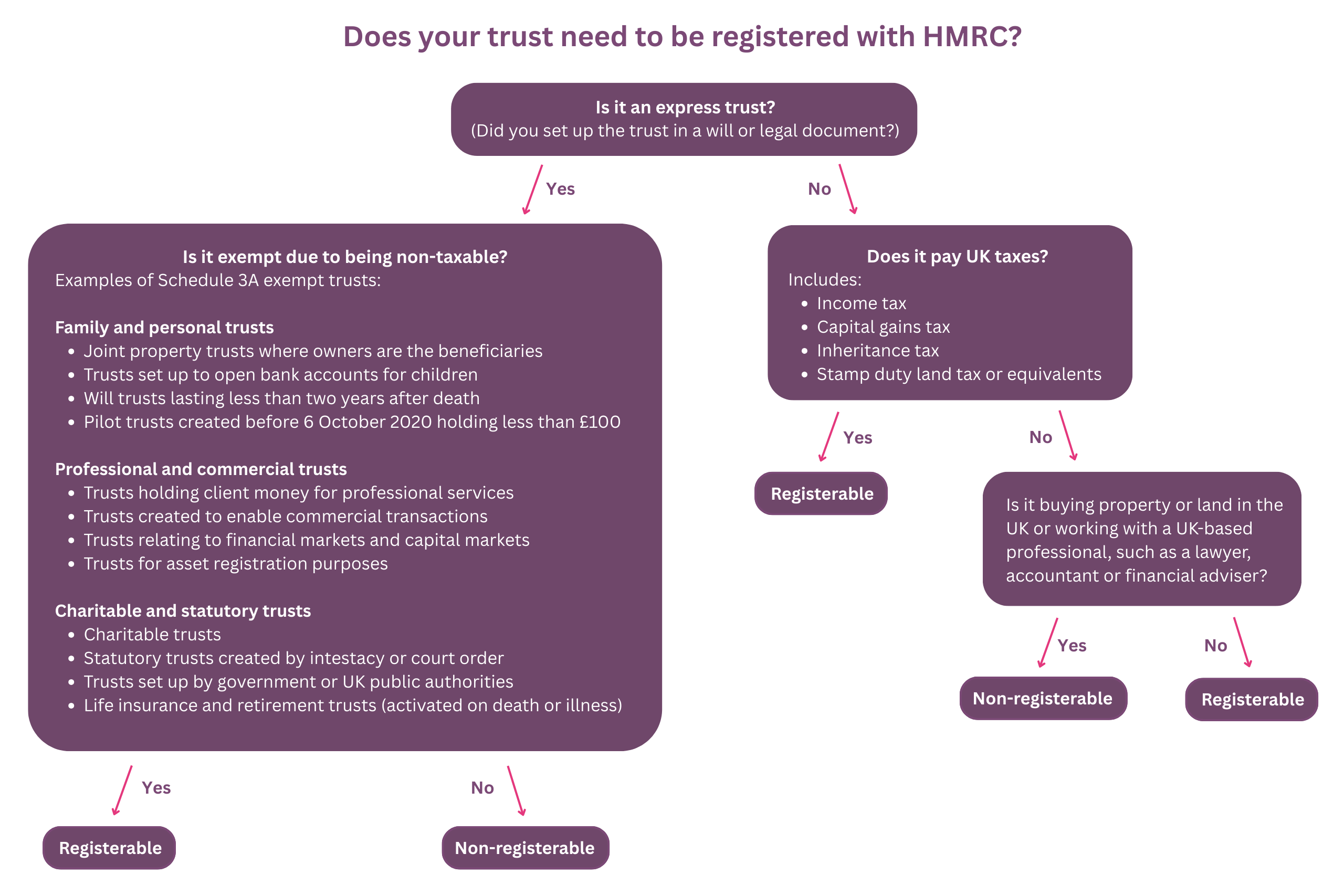 Many trusts don't need registration because they fall under Schedule 3A exemptions. If you're unsure whether your trust qualifies for an exemption, professional advice can save you time and prevent potential compliance issues.
The registration process – what to expect
When you register through HMRC's online Trust Registration Service, you'll need specific information about your trust:
- The trust's Unique Taxpayer Reference (UTR) if it has one
- Details of all assets held within the trust and their current values
- Information about trustees, beneficiaries and settlors
Once you complete the online registration, you'll receive downloadable proof of registration. The process typically takes 2-3 weeks to complete.
Having guided numerous trustees through this process, we know exactly what HMRC requires and can help ensure your application is completed accurately the first time.
Ongoing responsibilities after registration
Registration isn't a one-time task. Further responsibilities include:
- Annual updates: If your trust is liable for UK tax in any tax year, you must confirm by 31 January that all trust details remain accurate and up to date. This requirement applies every year, even if nothing has changed.
- Tax return requirements: For trusts with income tax or capital gains tax liability, you must also note on the trust's self-assessment form that you've updated the trust register.
- Changes in tax status: You must notify HMRC within 90 days if a non-taxable trust becomes liable for UK taxes, as you'll need to obtain a UTR.
- Third-party access: You can authorise agents (such as solicitors or accountants) to manage the trust registration on your behalf. They'll need their own Government Gateway account to access the system.
What happens if you haven't registered yet?
HMRC acknowledges that the Trust Registration Service requirements are relatively new, and many trustees only become aware of their obligations when advised by a professional.
While penalties of up to £5,000 can be issued for non-compliance, HMRC takes a case-by-case approach and typically won't impose penalties if you register promptly once you become aware of the requirement.
The key is taking action as soon as you realise registration may be necessary.
How LCF Law can help
Trust registration involves technical requirements that can seem daunting, especially when you're unsure whether registration applies to your specific situation.
Our experienced team has dealt with a wide variety of trusts, giving us the expertise to process your case smoothly and efficiently. Whether you need advice on registration requirements or want us to handle the entire process, we're here to help.
We offer a fixed-fee trust registration service at £475 including VAT. This covers the complete registration process with HMRC through the Trust Registration Service and we'll provide you with proof of registration once complete.
If you're wondering whether your trust needs registration or would like professional assistance with the process, contact Probate Practitioner Kathryn Livesey on 01943 885 798 or email ku.oc.fcl@yesevilk.
Get in touch
Please complete the form below. Fields marked with a * star are required.